
📑 Table of Contents
- Why Is Cycling One of the Best Ways to Get Fit in Dubai?
- How Does Cycling Compare to the Gym for Fitness?
- How Many Calories Does Cycling Burn?
- What Does an 8-Week Cycling Fitness Plan Look Like?
- Which Dubai Routes Are Best for Fitness Cycling?
- Which Bike Type Is Best for Fitness Cycling?
- How Do You Track Cycling Fitness Progress?
- Seasonal Cycling Fitness Plan for Dubai
- Frequently Asked Questions About Cycling for Fitness Dubai
- Conclusion
A 70 kg cyclist burns roughly 420 to 600 calories per hour at a moderate pace. That's more than most gym cardio machines at the same perceived effort.
But casual riding without structure leads to a familiar pattern: enthusiasm for two weeks, a plateau by week three, and a bike gathering dust by month two. Cycling for fitness Dubai works only when the rides have purpose, progression, and a plan.
This guide lays out a complete 8-week outdoor training plan built around Dubai's best cycling tracks. It covers calorie burn ranges by intensity, route-to-workout matching for NAS, Al Qudra, and Jumeirah, and how bike type shapes training outcomes.
Why Is Cycling One of the Best Ways to Get Fit in Dubai?
Cycling burns 400 to 600 calories per hour, strengthens legs, glutes, and core, and Dubai's flat dedicated tracks make it accessible for every fitness level.
Unlike running, cycling is low-impact. Knees and ankles absorb far less stress per pedal stroke than per footstrike, which means riders can train more frequently with shorter recovery windows. That consistency is what drives results over eight weeks.
Dubai's cycling infrastructure supports the habit. The RTA cycling track network stretches over 520 km of dedicated paths across the emirate, with plans to expand to 739 km. No fighting traffic. No dodging pedestrians. Just clean, flat tarmac.
There is also a mental edge. Research from British Cycling shows outdoor exercise reduces stress and increases energy levels compared to indoor gym sessions. The changing scenery of a desert sunrise at Al Qudra or a sea breeze along Jumeirah does what a gym wall cannot.
How Does Cycling Compare to the Gym for Fitness?
Cycling matches or exceeds gym cardio for calorie burn, adds route variety that prevents boredom, and costs less over time once a bike is in the garage.
Here's a straightforward calorie comparison for a 70 kg person exercising at moderate intensity for one hour:
- Cycling outdoors: 420 to 600 calories
- Treadmill running: 400 to 500 calories
- Elliptical trainer: 350 to 450 calories
The numbers are close. But the experience isn't. Gym cardio machines keep riders staring at a screen or a wall, which is why dropout rates for gym memberships are high within the first three months. Cycling outdoors swaps that monotony for new routes, faster segments, and the kind of natural reward loop that keeps people coming back.
Cost is another factor. A typical Dubai gym membership runs 300 to 500 AED per month. A quality pre-loved hybrid bike or road bike is a one-time investment that pays for itself within a few months, with zero recurring fees.
How Many Calories Does Cycling Burn?
A 70 kg rider burns approximately 420 calories per hour at moderate pace (15 to 20 km/h) and 600+ calories per hour at vigorous pace (22 to 26 km/h).
The exact number depends on body weight, terrain, wind resistance, and bike type. Heavier riders burn more per hour. Headwinds on open tracks like Al Qudra add resistance that indoor trainers can't replicate.
Here are approximate ranges based on data from Medical News Today and RunRepeat:
| Intensity | Speed Range | Calories/Hour (70 kg) |
|---|---|---|
| Light (easy spin) | 12-15 km/h | 280-350 |
| Moderate (steady effort) | 15-20 km/h | 400-500 |
| Vigorous (pushing hard) | 22-26 km/h | px;">550-700 |
| High intensity (intervals) | 26+ km/h bursts | 700-900+ |
A practical note: a heavier bike, like a hybrid with wider tires, requires more effort to maintain the same speed on flat ground. That translates to slightly more calories burned per ride compared to a lightweight road bike at the same pace. Both are solid choices; the difference is small.
Individual results vary. These figures are estimates, not guarantees. Pair cycling with balanced nutrition for the best outcomes.
What Does an 8-Week Cycling Fitness Plan Look Like?
Start with three 20-minute rides per week, then gradually increase duration and intensity over eight weeks until reaching three 45 to 60-minute rides with interval sessions.
The structure matters more than raw distance. A rider who follows a progressive plan will see measurable improvement in endurance, average speed, and recovery time. Someone riding the same casual route at the same easy pace for two months will plateau fast.

Weeks 1 to 2: Build the Habit
Three rides per week, 20 minutes each, at an easy conversational pace. The goal isn't fitness yet. It's getting comfortable on the bike: seat position, gear shifting, braking confidence. Ride the NAS 4 km loop and focus on smooth pedalling.
Weeks 3 to 4: Increase Duration
Three rides per week, 30 minutes each. One of those rides should feel harder than the other two. "Moderate effort" means breathing is elevated but holding a conversation is still possible, just not easy. Move up to the NAS 8 km loop.
Weeks 5 to 6: Add Intervals
Three rides per week, 40 minutes each. One ride becomes a structured interval session: 1 minute of hard effort followed by 2 minutes of easy spinning, repeated 6 times. Do intervals at NAS for the controlled loops. Use Al Qudra for the longer endurance ride.
Weeks 7 to 8: Push Distance and Intensity
Three rides per week, 45 to 60 minutes each. Two moderate-pace rides and one interval session. Tackle the full Al Qudra 35 km bypass loop for the long ride. Use NAS for intervals and speed work.
| Week | Frequency | Duration | Intensity | Suggested Route |
|---|---|---|---|---|
| 1-2 | 3x/week | 20 min | Easy (conversational pace) | NAS 4 km loop |
| 3-4 | 3x/week | 30 min | Moderate (talk, not sing) | NAS 8 km loop |
| 5-6 | 3x/week | 40 min | Moderate + 1 interval day | NAS inte |
| 7-8 | 3x/week | 45-60 min | 2 moderate + 1 interval | Al Qudra long + NAS speed |
Rest days between rides are non-negotiable. Muscles rebuild during recovery, not during the ride itself.
Which Dubai Routes Are Best for Fitness Cycling?
Nad Al Sheba suits interval training with its 4 to 8 km loops, Al Qudra's 50 km circuit builds endurance, and Jumeirah Beach's 16 km path works for active recovery rides.
Nad Al Sheba (NAS): The Interval Track
NAS Cycle Park offers 4 km, 6 km, and 8 km closed loops around the old racecourse. Flat, well-lit, open 24 hours, and free. The short laps make it perfect for timed efforts: push hard for one lap, spin easy for the next. Track lap times week over week to measure progress.
Al Qudra: The Endurance Circuit
The Al Qudra Cycling Track is an 86 km dedicated track with a 50 km main loop and a 35 km shortcut. It's located about 35 minutes from Downtown Dubai. Desert scenery, flat tarmac, and zero traffic make it the best option for long, steady rides in Weeks 5 through 8.
Jumeirah Beach: The Recovery Route
A 16 km coastal cycling path runs from Dubai Water Canal to Dubai Internet City, passing Kite Beach, Burj Al Arab, and Sunset Mall. The sea breeze and gentle pace make this ideal for active recovery days, the easy spins between harder sessions that keep legs fresh.
For a complete guide to all Dubai cycling routes, check out AK Bikes' cycling routes guide.
Which Bike Type Is Best for Fitness Cycling?
Hybrid bikes suit beginners with their upright position and versatility, while road bikes let experienced riders cover longer distances at higher speeds for greater calorie burn.
Hybrid Bikes: The Starter Fitness Bike
A hybrid combines the comfort of wider tires with the efficiency of a lighter frame. The upright riding position is easier on the back and shoulders during those first few weeks. Hybrids handle both paved tracks and light gravel sections. They are slightly heavier than road bikes, which means more effort per pedal stroke on flat ground, and marginally more calories burned at the same speed.
Browse pre-loved hybrid bikes at AK Bikes. Every bike is professionally serviced and ready to ride.
Road Bikes: The Distance Machine
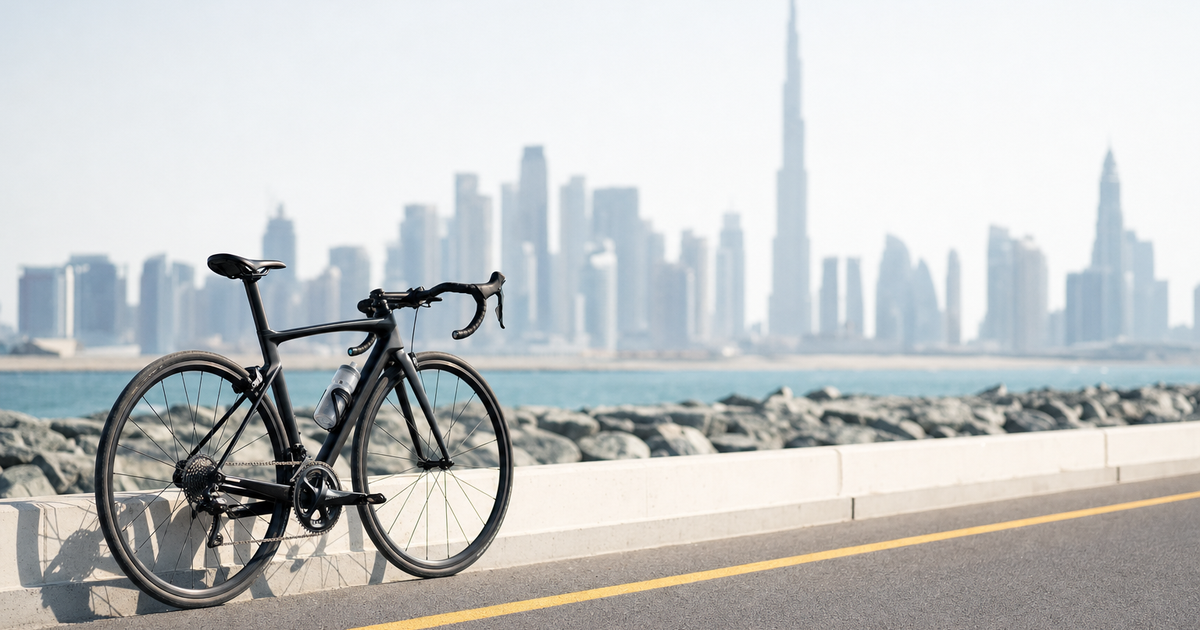
Road bikes are built for speed and efficiency. Drop handlebars, narrow tires, and a lighter frame reduce rolling resistance. Riders who graduate past Week 4 and want to tackle the Al Qudra 35 km loop will appreciate the difference. Longer distances at faster speeds translate to bigger fitness gains per ride.
Explore pre-loved road bikes for a one-time investment at a fraction of retail.
Fit Matters More Than Price
A poorly fitted bike causes knee pain, back strain, and saddle discomfort. Those issues kill consistency faster than anything else. Visit a store, sit on the bike, and test the reach to the handlebars before committing. A bike that fits right feels right from the first ride.
How Do You Track Cycling Fitness Progress?
Track rides with Strava or a basic cycling computer, monitor average speed improvement over weeks, and use heart rate as the effort gauge.
Strava (free tier) records GPS routes, splits, segment times, and weekly ride summaries. The real value is comparing NAS lap times from Week 1 to Week 8. Faster laps at the same perceived effort means fitness is improving.
Heart rate monitors measure actual physiological effort rather than just speed. The clearest fitness signal is this: if the same ride at the same speed produces a lower heart rate after six weeks, cardiovascular fitness has improved. Basic chest straps or wrist-based monitors work fine for this purpose.
Power meters are the most precise measurement tool, tracking watts output per pedal stroke. But at 1,500+ AED for entry-level models, they are an upgrade for serious riders who complete the 8-week plan and want to go deeper. Not a starting requirement.
Seasonal Cycling Fitness Plan for Dubai
Ride outdoors from October to April when temperatures stay comfortable, then shift to early-morning rides or indoor trainers during May through September.
October to April: Peak Season
Temperatures range from 18 to 28C. This is when the 8-week plan works best. Schedule rides at any time of day. Morning rides offer cooler air and emptier tracks. Evening rides at NAS under floodlights are popular with cycling clubs.
May to September: Adapt or Pause
Daytime temperatures regularly exceed 40C. Riding at midday is genuinely dangerous: heat exhaustion and dehydration are real risks. The two safe windows are before 6:30 AM and after sunset. Many experienced Dubai cyclists shift to dawn rides during summer months.
An indoor smart trainer keeps the fitness plan running when outdoor conditions aren't safe. Paired with apps like Zwift or TrainerRoad, indoor sessions can replicate interval workouts from the 8-week plan without the heat risk.
Hydration Rule
Carry at least 750 ml of water per hour of riding in warm conditions. Electrolyte tablets help replace salts lost through sweat. This applies even during the cooler months; Dubai's humidity can be deceptive.
Frequently Asked Questions About Cycling for Fitness Dubai
These are the most common questions from riders starting a cycling fitness routine in Dubai.
How often should I cycle to lose weight?
Three to four rides per week of 30 to 45 minutes at moderate intensity creates a consistent calorie deficit that supports gradual weight loss alongside a balanced diet.
Cycling alone won't override poor nutrition. But combined with reasonable eating habits, three structured rides per week can burn an additional 1,200 to 1,800 calories, which adds up over months.
Is cycling better than running for fitness?
Cycling burns comparable calories to running but with significantly less joint impact, making it more sustainable for long-term fitness.
Runners face higher injury rates from repetitive impact on knees, ankles, and hips. Cyclists can train four to five days per week without the same overuse risk. For people who find running uncomfortable or are carrying extra weight, cycling is the more practical path to consistent exercise.
What bike is best for fitness in Dubai?
A hybrid bike suits beginners who want comfort and versatility, while a road bike is better for experienced riders covering longer distances at higher intensity.
Both types are available as certified pre-owned options at AK Bikes, professionally serviced and ready to ride. The right fit matters more than the price tag.
Conclusion
Cycling for fitness Dubai comes down to three things: a structured plan, the right routes, and seasonal awareness.
The 8-week plan in this guide takes a complete beginner from three 20-minute spins to three 45 to 60-minute structured workouts. NAS handles intervals. Al Qudra builds endurance. Jumeirah provides recovery rides. And the right bike type, whether hybrid or road, shapes how the body responds to training.
Start this week. Pick up a pre-loved hybrid bike or road bike, ride three laps at NAS, and track it on Strava. Eight weeks from now, the difference will be measurable.
Looking for riding partners? Join AK Bikes' community rides for accountability and local route knowledge.

Leave a comment
This site is protected by hCaptcha and the hCaptcha Privacy Policy and Terms of Service apply.