
📑 Table of Contents
- When Is It Safe to Cycle in Dubai During Summer?
- How Much Water Do You Need for Summer Cycling in Dubai?
- What Gear Do You Need for Cycling in Dubai Heat?
- Which Bike Is Best for Summer Riding in Dubai?
- Summer Bike Prep Checklist
- When Should You Skip the Ride?
- How Can You Stay Fit When It Is Too Hot to Ride?
- Frequently Asked Questions About Cycling in Summer Dubai
- Conclusion
Dubai's summer temperatures regularly push past 40C. Most cyclists park their bikes from June to September.
But cycling in summer Dubai does not have to mean four months off the bike. It does mean respecting the conditions, planning around narrow riding windows, and knowing when to move indoors. This guide covers the practical details: when to ride, how much to drink, which gear actually helps, what bike handles heat best, and when the smartest decision is skipping the ride entirely.
No hype. No shortcuts. Just honest, Dubai-specific summer cycling advice for 2026.
When Is It Safe to Cycle in Dubai During Summer?
The safest summer cycling windows in Dubai are sunrise (roughly 5:30 to 6:30 AM) and after sunset (7:00 PM onward), when temperatures typically sit below 35C.
The exact windows shift month by month as sunrise creeps later and sunset creeps earlier through the season.
Monthly Riding Windows
| Month | Sunrise | Sunset | Best Morning Window | Best Evening Window |
|---|---|---|---|---|
| June | ~5:29 AM | ~7:12 PM | 5:30 - 7:00 AM | After 7:15 PM |
| July | ~5:35 AM | ~7:10 PM | 5:35 - 7:00 AM | After 7:15 PM |
| August | ~5:50 AM | ~6:55 PM | 5:50 - 7:00 AM | After 7:00 PM |
| September | ~5:55 AM | ~6:25 PM | 5:55 - 7:00 AM | After 6:30 PM |
Notice how the morning window compresses as summer progresses. By September, riders have barely an hour of comfortable daylight before the heat builds.
Why Midday Is Genuinely Dangerous
Between 10:00 AM and 4:00 PM, Dubai summer temperatures routinely exceed 42C. Combined with humidity levels that can top 80-90%, the body's cooling system struggles to keep up. This is not about discomfort. This is a real heat illness risk.
The combination of high temperature and high humidity means sweat does not evaporate efficiently, which is the body's primary cooling mechanism. When that system fails, core temperature rises fast.
Evening Rides Need Lights
Post-sunset rides are popular across Dubai, but darkness arrives quickly after 7:00 PM in summer. Front and rear lights are non-negotiable for evening rides. Reflective gear or a high-visibility vest adds another layer of safety.
For route inspiration during those early-morning windows, check out AK Bikes' guide to the best cycling routes in Dubai.

How Much Water Do You Need for Summer Cycling in Dubai?
Cyclists in Dubai's summer heat need 500 to 750ml of fluid per hour on the bike, plus pre-ride hydration starting 2 to 3 hours before the ride begins.
Most riders underestimate how much fluid they lose in 40C+ temperatures with high humidity. Getting hydration right is the single biggest factor separating a safe summer ride from a dangerous one.
Pre-Ride Hydration
Start drinking water 2 to 3 hours before heading out. Aim for roughly 500ml in the hours before the ride. Avoid chugging large volumes right before clipping in, as the body absorbs fluid better in steady sips.
If planning a weekend ride, some cycling coaches recommend beginning the hydration process the day before, not just on the morning itself.
On the Bike
Carry two bottles. In Dubai summer heat, one bottle will not last a 90-minute ride. Invest in a second bottle cage if your frame only came with one.
Drink every 15 to 20 minutes, even before feeling thirsty. Thirst signals arrive after dehydration has already begun.
Electrolytes Matter
Plain water alone is not enough during heavy sweating. When the body loses sodium, potassium, and magnesium through sweat, the risk of cramping and fatigue increases sharply. Add an electrolyte tablet to every other bottle, or alternate between water and a sports drink.
Post-Ride Recovery
Continue drinking for 2 hours after finishing. A simple check: weigh yourself before and after a ride. Every kilogram lost represents roughly one litre of fluid that needs replacing.
What Gear Do You Need for Cycling in Dubai Heat?
Summer cycling gear in Dubai should prioritize ventilation, UV protection, and moisture management, including mesh jerseys, UV arm sleeves, and well-ventilated helmets.
The instinct to strip down to bare minimum clothing in extreme heat is understandable but counterproductive. The right gear actually keeps the body cooler than exposed skin.
Clothing
Lightweight mesh cycling jerseys with UPF protection are the foundation. White or light-coloured jerseys reflect heat more effectively than dark colours.
UV arm sleeves (UPF 50) sound counterintuitive in 40C heat, but they reduce skin temperature when dampened with water. They block UV radiation while allowing evaporative cooling. Many experienced UAE cyclists swear by them.
Helmet
A well-ventilated helmet with large air channels makes a noticeable difference in heat management. Look for models with deep internal channels that allow airflow across the scalp. AK Bikes carries a range of helmets designed for warm-climate riding.
Sun Protection
Apply SPF 50+ sunscreen at least 20 minutes before riding. Focus on areas that jerseys and shorts leave exposed: the back of the neck, ears, backs of hands, and lower face below sunglasses.
Reapply every two hours on longer rides. Sweat and wind strip sunscreen faster than most riders expect.
Lights for Early and Late Rides
Any ride that starts before full sunrise or continues past sunset requires front and rear lights. This is not optional. Dubai traffic moves fast, and visibility in low-light conditions keeps riders safe.
Which Bike Is Best for Summer Riding in Dubai?
Lighter road bikes and hybrid bikes handle summer heat better than heavy mountain bikes because less weight means less effort and less body heat generated per kilometre.
This is simple physics. A 12kg road bike requires significantly less energy to move than a 16kg mountain bike at the same speed. Less energy expenditure means less metabolic heat, which means slower dehydration and a cooler body temperature.
Road Bikes
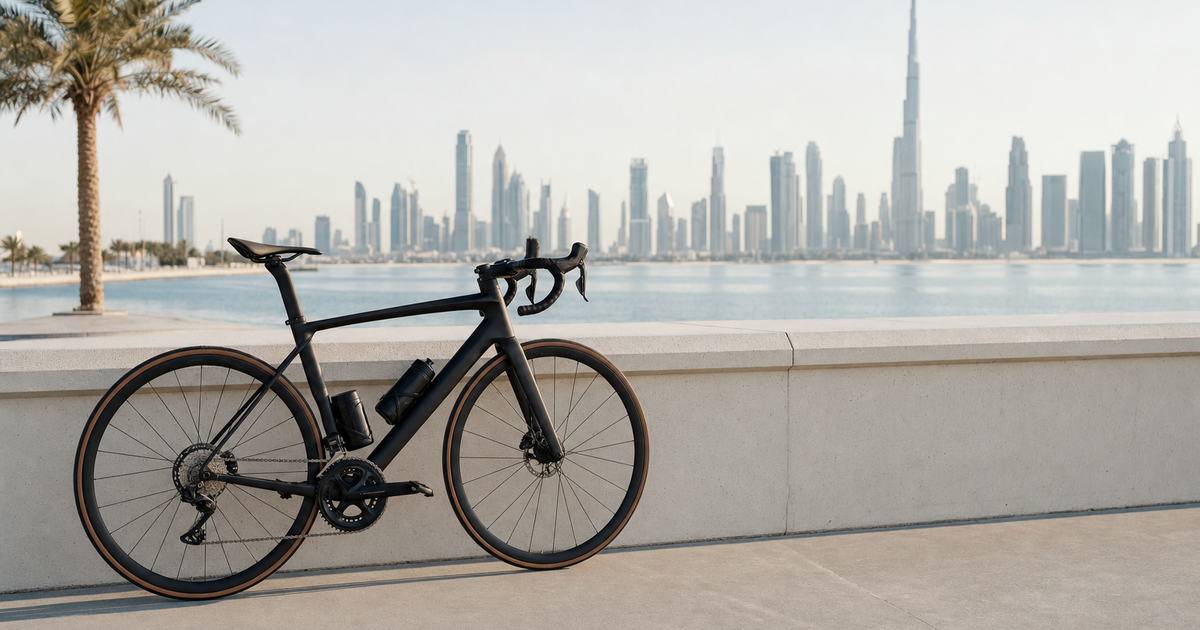
For smooth tarmac routes like Al Qudra, JBR, and Dubai Marina, a road bike is the ideal summer choice. Thinner tires create less rolling resistance. Lighter frames demand less effort. Drop handlebars allow multiple hand positions that help with airflow.
A pre-loved road bike from a premium brand like Trek, Giant, or Specialized delivers these benefits at a fraction of the new-bike price. AK Bikes stocks a rotating selection of pre-loved road bikes that are professionally checked and ready to ride.
Hybrid Bikes
For riders who mix road and light trail, a hybrid bike offers the best of both worlds. Comfortable upright geometry, wider tires for stability, and lighter weight than a full mountain bike. Hybrids are a popular choice for casual summer riders and commuters.
Mountain Bikes in Summer
Mountain bikes are not wrong for summer, just harder work. The heavier frame, knobby tires, and suspension add rolling resistance and weight. On a 40C morning, that extra effort adds up. Consider reserving the MTB for cooler months or early-season desert trails, and switching to a lighter pre-loved road or hybrid for summer road rides.
Summer Bike Prep Checklist
Summer heat changes tire pressure, evaporates chain lube faster, and UV-damages exposed components. A quick pre-summer check prevents mid-ride breakdowns.
Dubai heat affects bikes differently than mild-climate cycling. Components that need no attention in January can fail in July. Here is what to check before summer riding season.
Component-by-Component Guide
| Component | Heat Effect | Action | How Often |
|---|---|---|---|
| Tires | Air expands in heat, over-pressurizing tires inflated in AC | Check pressure before every ride; inflate 5-10 PSI below max in summer | Every ride |
| Chain | Lube evaporates faster above 40C | Switch to wet/heavy lube; reapply every 2-3 rides instead of weekly | Every 2-3 rides |
| Brakes | Cable tension changes with metal expansion | Test brake responsiveness before each ride | Every ride |
| Saddle & Grips | UV degrades rubber, vinyl, and synthetic materials | Store bike indoors or use a cover; replace cracked grips before they fail | Monthly check |
| Bolts & QR Levers | Heat cycling can loosen fasteners over time | Quick torque check on stem, seatpost, and wheel QRs | Monthly |
All the parts and tools for these checks are available through AK Bikes' parts collection. Summer maintenance is straightforward DIY work with the right components.

When Should You Skip the Ride?
Skip outdoor cycling when temperatures exceed 42C, humidity tops 80%, or if dizziness, nausea, or chills appear during a ride.
Being honest about dangerous conditions is not weakness. It is the difference between staying fit all summer and ending up in a clinic. The goal is consistency across the season, not heroics on any single day.
Heat Exhaustion Warning Signs
Watch for these symptoms on the bike:
- Heavy sweating followed by sudden stop in sweating
- Dizziness or lightheadedness
- Nausea or vomiting
- Headache that worsens during the ride
- Muscle cramps, especially in the legs
- Cold, clammy skin despite the heat
If any of these appear: stop riding, move to shade, drink fluids, and cool down. Do not try to push through.
Heat Stroke Is a Medical Emergency
Heat stroke is more serious. Signs include confusion, hot and dry skin (sweating stops entirely), rapid heartbeat, and in severe cases, loss of consciousness. This requires immediate medical attention. Call emergency services.
Environmental Red Flags
Some mornings, even the sunrise window is not safe. If the temperature is already above 38C at 5:30 AM, or humidity exceeds 80%, consider indoor training instead. Shamal winds and sandstorms during summer months add another layer of risk. If visibility drops, do not ride.
The Honest Message
Some days, the best cycling decision is staying off the road. Coming back safely for tomorrow's ride beats pushing through dangerous conditions today. Summer fitness is a marathon, not a single session.
How Can You Stay Fit When It Is Too Hot to Ride?
Indoor turbo trainers let cyclists maintain cycling fitness through Dubai's hottest months, pairing with apps like Zwift for structured training.
There will be weeks in July and August when outdoor riding is simply not practical, even during the sunrise window. That does not mean losing fitness.
Indoor Trainers
A turbo trainer turns any outdoor bike into a stationary training station. No second bike needed. Just mount the rear wheel (or remove it, for direct-drive models) and ride in air conditioning. AK Bikes stocks a selection of indoor trainers that work with most road and hybrid frames.
Trainer Tires
Switching to a trainer-specific tire on the rear wheel reduces noise and prevents flat spots on outdoor rubber. The swap takes minutes and protects the more expensive outdoor tire from trainer wear.
Training Apps
Apps like Zwift, TrainerRoad, and Rouvy provide structured workouts, group rides, and progress tracking. They turn indoor sessions from mindless spinning into focused training. Many Dubai cycling groups stay connected through virtual rides during summer.
The Summer Payoff
Riders who train indoors through June to September consistently return to outdoor cycling stronger when temperatures cool in October. The base fitness built on a trainer carries directly to the road. Summer does not have to be a dead zone.
Frequently Asked Questions About Cycling in Summer Dubai
These are the most common questions riders ask about cycling through Dubai's summer season.
Is it safe to cycle in Dubai during summer?
Yes, with the right precautions. Ride during early-morning or post-sunset windows, hydrate aggressively, wear UV-protective gear, and recognize when conditions are too extreme for outdoor riding.
What temperature is too hot to cycle in Dubai?
Most cycling safety guidance suggests avoiding outdoor exercise when temperatures exceed 42C, especially when combined with humidity above 70-80%. At those levels, the body cannot cool itself efficiently through sweat evaporation.
What is the best time to cycle in Dubai during summer?
Sunrise to 7:00 AM is the best window. Temperatures are at their lowest, roads are relatively quiet, and UV exposure is minimal. The secondary window opens after 7:00 PM, though visibility and traffic require extra caution.
How much water should I carry for a summer ride in Dubai?
Plan for 500 to 750ml per hour. For a 90-minute ride, bring at least two full bottles and begin hydrating 2 to 3 hours before the ride starts. Add electrolytes to every other bottle.
Can I use an indoor trainer through summer instead?
Absolutely. An indoor turbo trainer paired with a trainer-specific tire lets riders maintain cycling fitness in air conditioning. Many Dubai cyclists switch to indoor training from June through September and return to outdoor rides stronger in October.
Conclusion
Summer cycling in Dubai is real, but it demands respect. The riders who stay fit through June to September share a common approach: they ride within narrow safe windows, hydrate far more than they think necessary, choose lighter bikes and smarter gear, and move indoors without hesitation when conditions cross the line.
Here is what to do this week:
- Check tire pressure and chain lube on your bike. Summer changes both.
- Set a sunrise alarm for your next ride. The 5:30 to 6:30 AM window is your best friend.
- Stock up on electrolytes and fit a second bottle cage if you only have one.
Ready to gear up for summer? Browse AK Bikes' selection of lighter pre-loved road bikes and hybrid bikes, or set up your indoor training station with a turbo trainer and trainer tire.

Leave a comment
This site is protected by hCaptcha and the hCaptcha Privacy Policy and Terms of Service apply.